Dii machinae sumus

We now have a domain: cybertekzine.space. It goes to our main landing page with all the links.
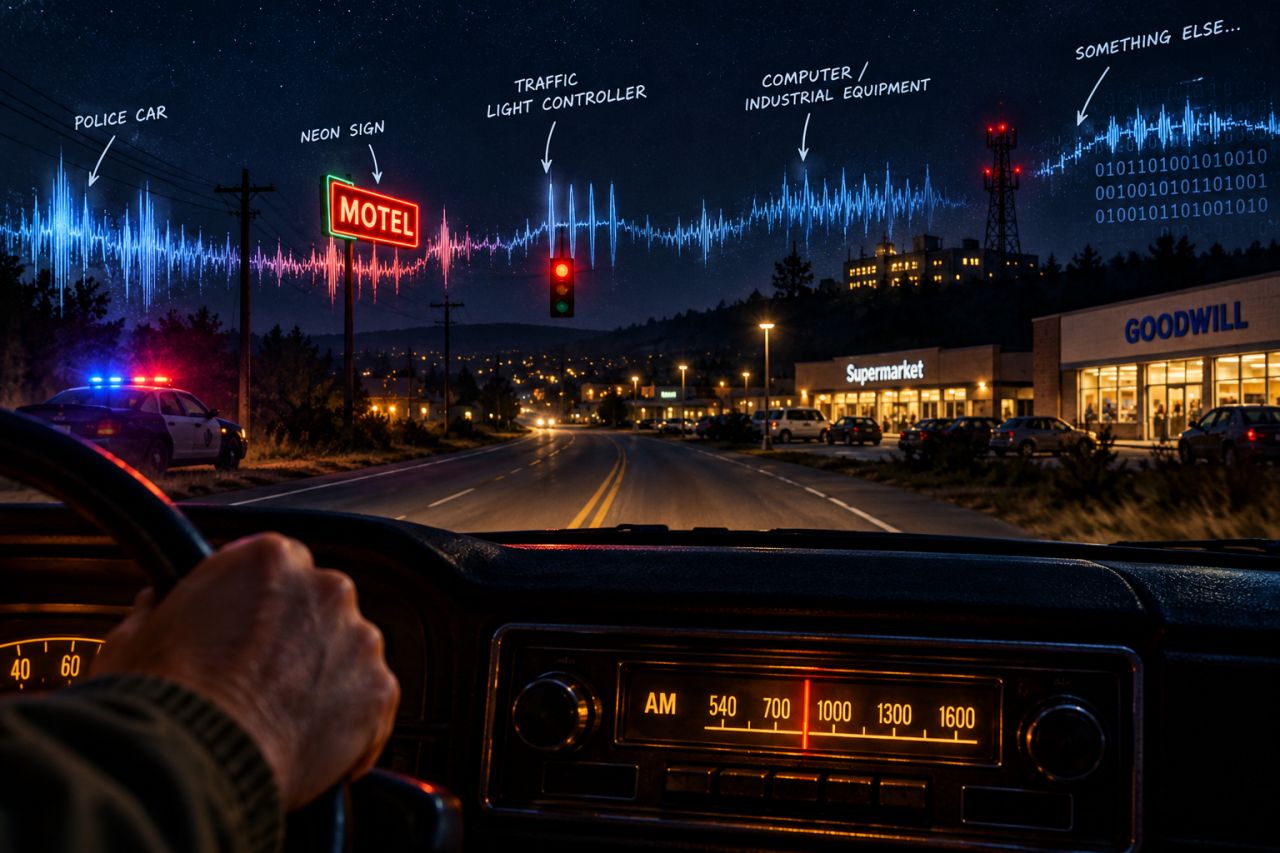
Spent a little time this afternoon stream-side at one of my common field locations. A dead end closed roadway about 1800 feet long that parallels a local river. The road makes a great test bed for part 15 devices. Park at the gate, fire up the emitter, and take a walk with an Icom IC-R5. Today however, I was scouting for locations where I might find the Black Sand as part of the ongoing lo-tek radio experiments. Quartz, silicon, copper, lead, ferrites. You can do all sorts of lo-tek experiments with them, but they also make up the computing machine.
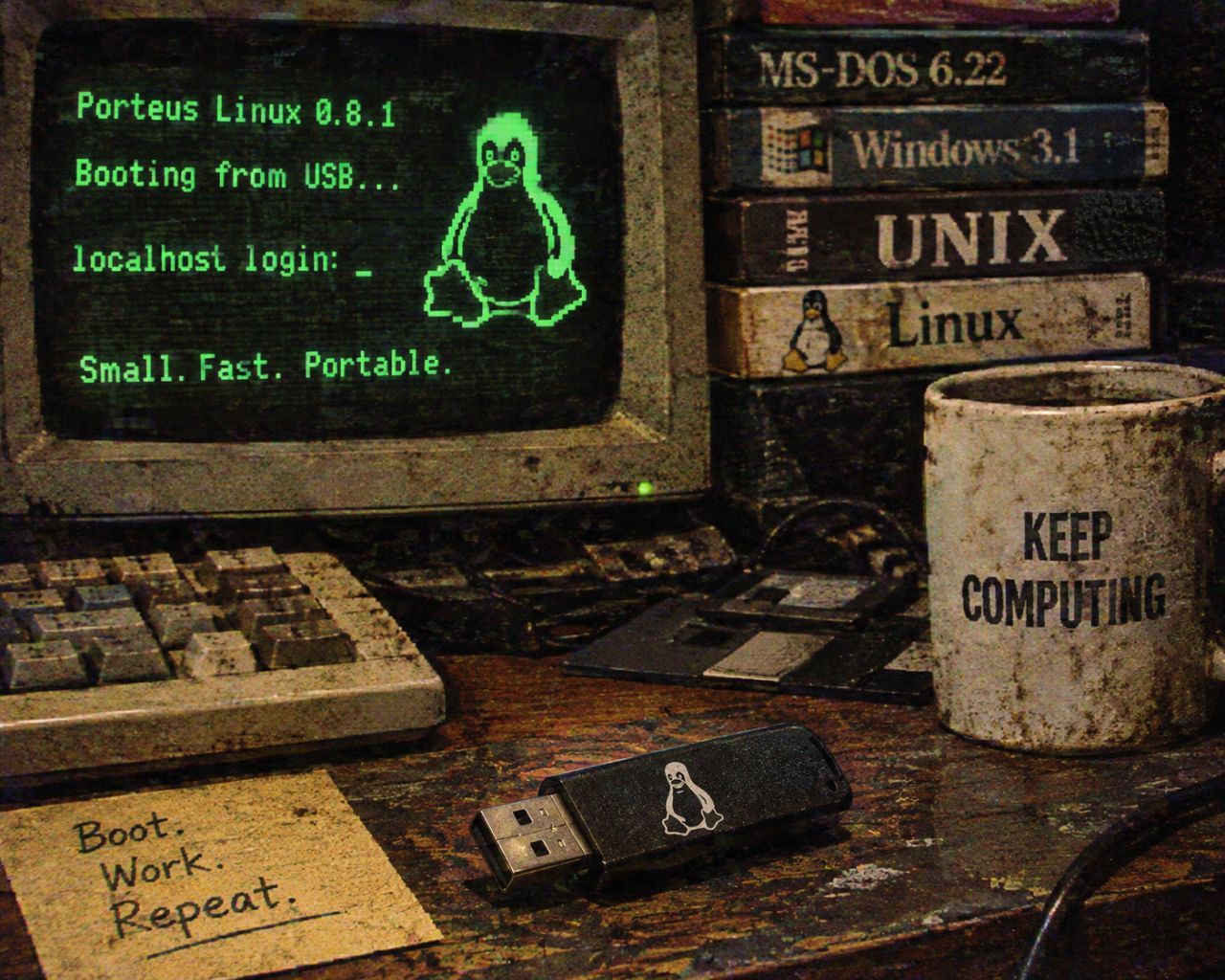
I remember the first time I saw one of the machines. Neighborhood kid’s dad had one form work. It was a Commodore PET. Loaded programs in through a cassette tape player. Had a few programs, including an artillery game. Took forever to load it in. I remember seeing him type in a few lines of BASIC. A few years later we started seeing the machines in displays at Caldor, Sears, Service Merchandise, all over the place. I was 14 when I got my first one, a Timex Sinclair 1000. Was a late Christmas present because they sold out everywhere the summer before Christmas when they were released. Worked with it all of a year or two before I upgraded to a Commodore VIC-20, and shortly afterwards an Atari 800XL. Meanwhile we had Apple IIs, IBM PCs, and a DEC PDP-11/70 at school. When you saw the word READY followed by a blinking cursor you knew that the whole magilla was in your hands, and the only things stopping you were the limitations of your own knowledge, the fact that there are only 24 hours in a day, the capabilities of your hardware combined, and financial constraints.
I remember when the Commodore Amiga and Atari ST were released. My friend Jim (aka “Outland”), the SYSOP of Milliways BBS in New Jersey, clued me in to the articles about them in Byte Magazine. Byte was the bomb back in the day. We couldn’t afford a 68000 machine until a few years later when I came across some 68000 CPU single-board computers at my local electronic/industrial surplus place at the bargain price of $40 each. They had a rudimentary at best OS on them, but by then we had accumulated information on program in assembly, and had learned how interesting and useful single board computers and embedded systems were becoming.
That was another thing that the mid 1980s produced. Around the same time Commodore and Atari were producing their 16-bit microcomputers, a guy named Steve Ciarcia in Connecticut had developed a powerful 8-bit Z80 compatible machine that fit in a lunch box. He called it the SB180 and the example for his article, Part 2, was actually built into a Fraggle Rock lunchbox. You can see the whole history here. Never got one, but it’s gonna be one of those things that I’ll find at the bottom of a box of circuit boards at a swap meet for $10. I might even get it since it’s far enough away from the i.MX28 boards I wrench on at the day job to not seem like work. Embedded systems continued to grow as a specialty niche parallel to general purpose computing, and many of us followed it through magazines like Circuit Cellar Ink and Nuts and Volts.
It was in Nuts and Volts during the early 1990s where I first saw mention of the Parallex BASIC Stamp. Finally, an embedded system using a language I was intimately familiar with. Bought one, and over the course of a weekend designed the Cheesebox that was in Cybertek Issue #12 before it was anywhere else. Great little widget that BASIC Stamp. Would probably still use one over an Arduino if I had a choice, despite what everyone else might say. It’s about what you can do with the machine instead of the choice of the machine itself. You make with what you’re comfortable and good with, or in some cases what you can afford.
I was messing around with whatever surplus and scrap single-board computer systems I could scrounge in the late 1990s and early 2000s. Dude out of California who was on OSUNY gave me a few that ran FORTH. Didn’t want to learn a new niche language at the time, and gave them to a fellow hobbyist who lives up county. Things changed about 20 years ago with the Arduino, the bar to entry for learning the machine got lower and lot of artist and other non-technical creative types could get in on the action. This fit right in with the “You can create art and beauty on a computer,” and “Computers can change your life for the better” aspects of the hacker ethic. Yet, quite a few people in the scene who should have known better dismissed the Arduino as a toy for “hipster hackers.” Not that anyone actually doing something cared. That’s the important part. They became gods of the machine. Deus ex machina forged by binary in their own image.
AI has lowered the bar to machine godhood yet again. People bitch about it. They can bitch all they want. Much like the so-called experts in the 1970s shit-talking early personal microcompuers, and then 30 years later with the Arduino, the people who are actually doing things don’t care, and will continue to do amazing things with the new machine tek. You can be a godawful complaining ass clown if you want, but Dii machinae sumus.
Meanwhile back in Dog Solitude, Sector 4173 of the New England Confederation, Interzone I have been taking a step or three back in time. As a matter of principle I avoid anything resembling what I do with at the day job. I previously mentioned my search for the Black Sand. Wildflower had the privilege of living seaside where you can mine it easy off the beach. I have to look around a little bit for it, but minedat.org has given me some clues.
The bottle deposit in Connecticut has gone up to 10 cents now, making it worthwhile to keep the things around for a periodic trip to the recycling station. The crew of Dog Solitude can easily accumulate 100 bottles over the course of 2-3 weeks, and there’s a recycling station in Torrington right across the street from a Goodwill. It’s not a great Goodwill as far as those places go. During normal hours it’s got local crazies and asshole pickers going through the book selections with their phones. At 30 minutes to close on a Saturday nite however it’s tolerable and I still occasionally find something there. Dropped off 10 bucks worth of bottles and cans at the recycling station, went across the street, and got lucky. One of the rarer Forrest Mims books was on the shelf for 3 bucks. Twenty six years ago Radio Shack offered an electronics learning lab with two books done by Mims. You could only get the books if you bought the kit. That makes them pretty uncommon on their own. Had come across Volume 2 in an obtainium lot without much thought about Volume 1. Found Volume 1 last Saturday at the Goodwill. A picker probably overlooked it because it doesn’t have a UPC bar code on it for them to scan. There was also an EE text or two on the shelf. I left them there. Too much like the day job, and I stick to DIY. Haven’t found a kit at a reasonable price yet, but I’ve got enough parts and solderless breadboards that I don’t need one.
The way things are going, if you’re gonna be putting together your own Dog Solitude you’re gonna have to look at going to places like Wal-Mart, Goodwill, Savers, Home Depot, Lowes, your local hardware store, and other such to see what you can find and work with it.